
The Professional’s Guide to Reviving Your Limestone Floors
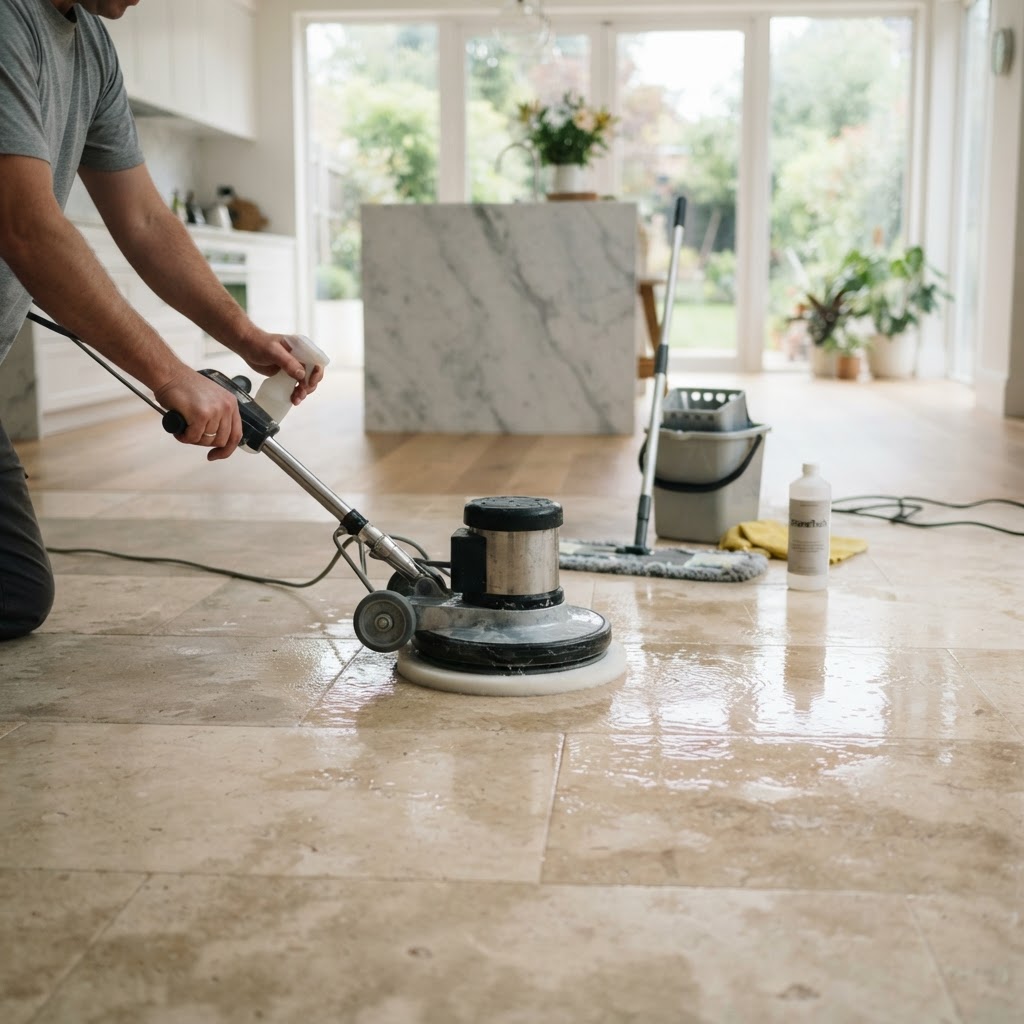
Master the art of maintaining your luxury limestone flooring with these expert techniques designed to preserve its natural beauty.
Understanding Limestone Maintenance
Limestone is a beautiful, porous sedimentary rock that adds an undeniable touch of sophistication to any UK home. However, its porous nature makes it highly susceptible to etching and staining from acidic substances like lemon juice, wine, or even harsh commercial cleaners. Unlike porcelain or ceramic, limestone requires a bespoke approach to keep its finish pristine.
The Golden Rule: Avoid Acidic Agents
The most critical mistake homeowners make is using multipurpose bathroom or kitchen cleaners. Most of these contain citric acid, vinegar, or bleach, all of which will permanently etch the surface of your limestone. Once the surface is etched, the dull spots are incredibly difficult to polish out. Always opt for a pH-neutral stone cleaner specifically formulated for natural stone. These solutions lift dirt without breaking down the calcium carbonate structure of the tile.
Deep Cleaning Without Damage
For routine maintenance, a dry microfibre mop is your best friend. Grit and fine sand act like sandpaper underfoot, creating micro-scratches that eventually make your floor look grey and dull. Use a high-quality dust mop daily to remove these abrasives before they have a chance to settle into the pores.
When it comes to a deeper clean, use a damp—never wet—mop. Excess water can penetrate the stone, potentially causing efflorescence, a chalky white deposit that appears on the surface as the moisture evaporates. Dilute your pH-neutral cleaner in warm water, wring your mop until it is barely damp, and work in small, manageable sections. Always buff the floor dry with a clean, soft towel immediately after mopping to ensure a streak-free finish.
Tackling Stubborn Stains
If you encounter a spill, speed is your greatest asset. Blot—never rub—the spill immediately with a clean, white cloth. Rubbing will only force the liquid deeper into the stone’s pores. For oily stains, a DIY poultice made from bicarbonate of soda and a tiny amount of water can be applied, covered with cling film, and left for 24 hours. The mixture will draw the oil out of the stone as it dries. However, if a stain persists, do not attempt aggressive sanding or scraping yourself.
Leave the Specialist Work to Owodoh
While routine care is manageable, professional stone restoration requires specialist equipment and deep-cleaning expertise to avoid permanent damage. If your limestone has lost its lustre or has deep-seated staining, the Owodoh marketplace connects you with vetted, premium cleaning professionals who specialise in natural stone care. Our experts use diamond-polishing techniques and high-grade sealants to restore your floors to their original brilliance, giving you peace of mind and more time to enjoy your home.